Therapy for Family Estrangement
Family estrangement is rarely simple.
It can hold grief, relief, guilt, rage, longing, numbness, loyalty, shame, clarity, and the strange ache of missing people you may not feel safe returning to.
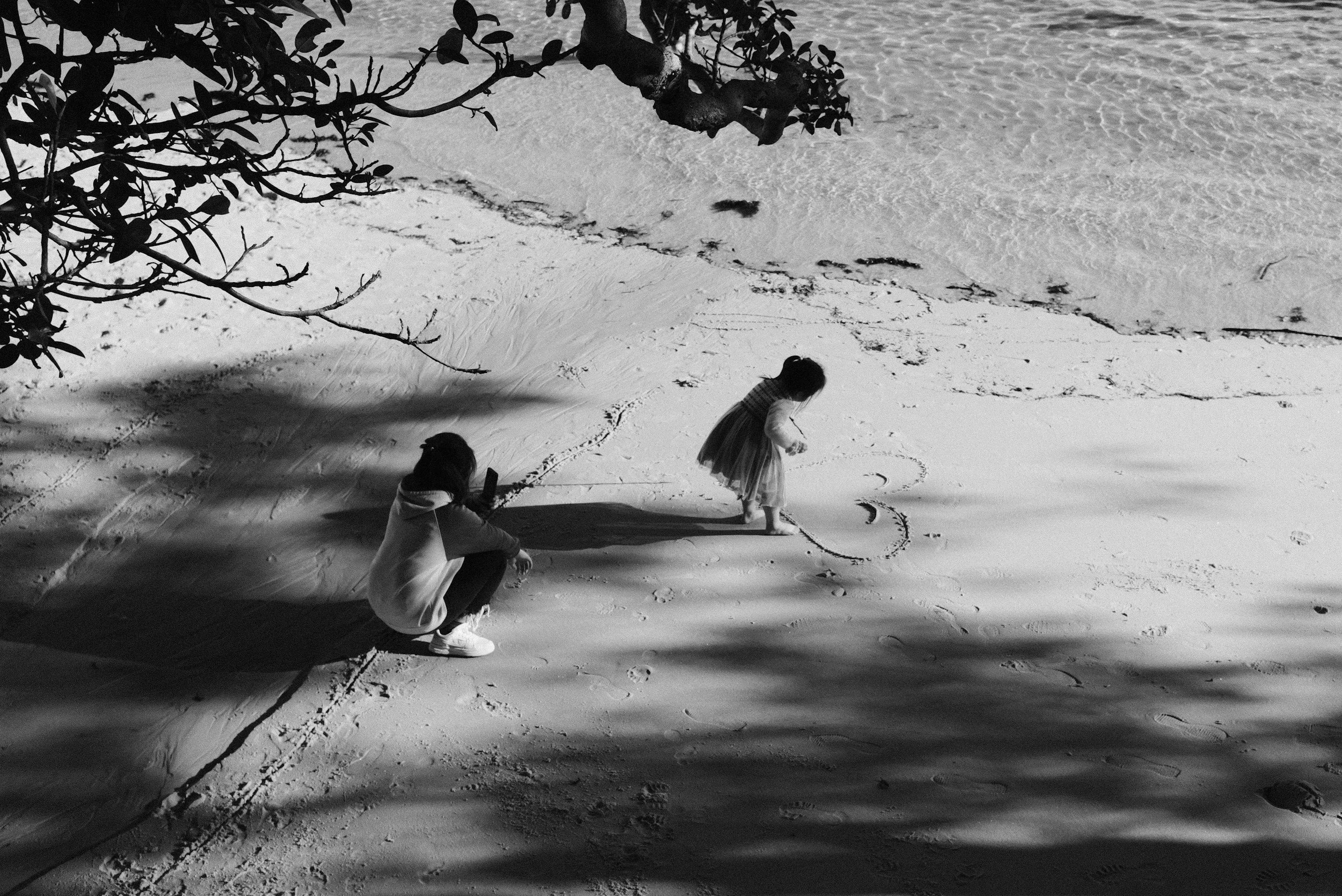
For adult survivors of family trauma, emotional abuse, neglect, scapegoating, chronic invalidation, parentification, coercive control, or other painful family dynamics, estrangement is often misunderstood from the outside.
People may reduce it to bitterness.
Drama.
Immaturity.
A lack of forgiveness.
A refusal to “move on.”
Estrangement is seldom a failure of love, rather it is the painful result of finally telling the truth about what love has cost you.
Estrangement does not usually happen overnight
Many adult survivors do not become estranged from family casually.
Most people try for a very long time before distance becomes necessary.
They explain.
They soften.
They forgive.
They minimize.
They give another chance, and then another, and then another.
They read the books. They send the careful texts. They try different tones. They try not bringing it up. They try bringing it up gently. They try family gatherings, shorter visits, clearer boundaries, lower expectations, radical acceptance, and the ancient trauma-survivor art of pretending the comment did not land like a brick through a window.
For many adult survivors, estrangement comes after years of trying to preserve a relationship without continuing to abandon themselves. It may be a last resort.
Or it may be the first honest boundary that was ever allowed to fully exist.
A survivor-centered approach to estrangement
My work with family estrangement is survivor-centered.
That means the focus is on the adult child survivor’s safety, truth, nervous system, grief, autonomy, boundaries, and healing.
It is not the business of my practice to encourage reconciliation as an absolute course of action.
I support healthy relationships. I believe repair can be meaningful when it is safe, mutual, accountable, and grounded in reality. Some families do change. Some relationships can heal. Some conversations can open doors that once seemed permanently closed.
But reconciliation is not always safe, possible, appropriate, or desired.
And it is not the highest moral outcome in every story.
Sometimes healing includes repair.
Sometimes healing includes distance.
Sometimes healing includes limited contact, structured contact, no contact, or a relationship that looks very different from what other people think family “should” be.
Therapy should not pressure survivors to return to relationships that require them to deny harm, accept ongoing mistreatment, or sacrifice their mental health for the appearance of family unity.
The goal is not to force forgiveness, reunion, or a beautiful holiday card.
The goal is to help you live more safely and honestly in your own life.
Estrangement can bring grief and relief
One of the most confusing parts of estrangement is that it can feel like opposite truths are happening at the same time.
You may feel relieved and devastated.
Clear and guilty.
Free and lonely.
Angry and heartbroken.
Certain and still haunted by the question, “What if I am the problem?”
This complexity does not mean you made the wrong decision.
It means you are human.
Family estrangement can involve grief for the people you are no longer in contact with, but it can also involve grief for the family you never really had.
The parent who could not protect you.
The sibling who joined the silence.
The relatives who saw enough to suspect something, but not enough to intervene.
The childhood you had to survive.
The version of love that always came with conditions, criticism, volatility, manipulation, denial, or a bill that arrived later.
Sometimes the grief is not only about losing access to someone.
Sometimes it is about finally accepting that the relationship may never become what you needed it to be.
That grief is real.
So is the relief.
Relief does not mean you are cruel.
It may mean your body finally has some distance from what kept hurting you.
The pressure to reconcile
Estranged adult child survivors often face enormous pressure to reconcile.
This pressure may come from relatives, cultural expectations, religious communities, friends, therapists, social media, holidays, illness, death, weddings, births, or the deeply unhelpful person who says, “But it’s your mother/father/parent/birth-giver,” as if you had somehow misplaced that information.
The pressure can be especially intense when the estranged family members present well to the outside world.
They may be charming.
Generous.
Successful.
Loved by others.
Capable of kindness in public.
This can make survivors question their own reality.
If everyone else sees them as wonderful, maybe I am too sensitive.
If they are nice to other people, maybe I exaggerated.
If they did some good things, maybe the bad things should not matter.
If they are aging or ill, maybe I owe them access to me.
Family trauma is often complicated because the people who hurt us may also have loved us in some ways. They may have provided, sacrificed, shown affection, or experienced their own suffering.
But complexity does not erase harm.
A person can have good qualities and still be unsafe for you.
A person can have suffered and still be responsible for the harm they caused.
A person can love you in the only way they know how and still not be able to love you in a way you can survive.
Boundaries are not cruelty
For adult child survivors, boundaries can feel like betrayal.
Especially if you were taught that loyalty meant silence, obedience, emotional caretaking, or protecting the family image at your own expense.
A boundary may sound simple from the outside:
“I am not discussing that.”
“I need space.”
“I will leave if yelling starts.”
“I am not available for this conversation.”
“I am willing to communicate by email only.”
“I am not attending this event.”
“I am not in contact with this person.”
But inside, setting that boundary may stir panic, guilt, grief, shame, and the old fear of being punished, rejected, smeared, misunderstood, or called selfish.
Boundaries are not cruelty.
They are the terms under which you can remain connected to yourself.
Sometimes boundaries protect the possibility of relationship.
Sometimes boundaries reveal that a relationship was only possible when you had none.
Both forms of clarity matter.
The myth of the perfect victim
Adult child survivors often feel pressure to be perfect in order to be believed.
They feel they must be calm, articulate, forgiving, emotionally regulated, morally spotless, and able to explain decades of family dynamics in one paragraph without sounding angry.
Absolutely not.
Survivors are allowed to be angry.
They are allowed to be messy.
They are allowed to have complicated feelings, imperfect reactions, unfinished grief, and moments of doubt.
They are allowed to have tried things they now regret.
They are allowed to have coped in ways that were not elegant.
They are allowed to tell the truth even if they cannot make it sound pretty.
Healing does not require you to become the kind of survivor who makes everyone comfortable.
It requires honesty, compassion, accountability where it belongs, and the freedom to stop performing emotional neatness for people who may prefer your silence.
Shame and self-doubt
Estrangement often carries shame.
Survivors may wonder:
What kind of person cannot have a relationship with their family?
Am I being dramatic?
Am I ungrateful?
Am I too sensitive?
Did I misunderstand?
Should I just let it go?
Will I regret this when they die?
These are painful questions.
They are also common.
Family systems often train survivors to doubt their perceptions. If your reality was denied, minimized, mocked, or rewritten for years, it makes sense that trusting yourself now may feel difficult.
Therapy can help you examine these questions without automatically treating your guilt as proof that you are wrong.
Guilt may mean you have violated your values.
But sometimes guilt simply means you have violated your conditioning.
There is a difference.
A very important one.
What therapy for family estrangement may include
Therapy for family estrangement is not about telling you what decision to make.
It is about helping you understand your experience clearly enough to make decisions from self-trust rather than fear, guilt, pressure, or survival mode.
In therapy, we may explore:
The history of the family dynamics and what led to distance
The roles you were assigned, such as scapegoat, caretaker, peacekeeper, golden child, truth-teller, invisible child, or emotional parent
The impact of trauma, neglect, invalidation, enmeshment, parentification, addiction, abuse, or chronic boundary violations
The grief of accepting what your family may not be able or willing to provide
The difference between healthy guilt and conditioned guilt
How to set and maintain boundaries without overexplaining yourself into exhaustion
How to navigate holidays, weddings, illness, death, family pressure, or contact attempts
How to build a chosen support system that does not require self-abandonment
How to reconnect with identity, self-worth, and desire after years of organizing yourself around survival
The work is not always easy.
But it can be profoundly relieving to have a place where you do not have to defend the fact that something hurt.
No contact, low contact, and limited contact
Estrangement is not always one thing.
Some people choose no contact.
Some choose low contact.
Some choose structured contact.
Some communicate only in writing.
Some attend certain family events with clear limits.
Some take temporary distance while they heal.
Some remain open to repair if specific conditions change.
Some know that contact is not safe for them.
There is no single correct arrangement.
The question is not, “What would make everyone else most comfortable?”
The question is, “What arrangement supports your safety, dignity, mental health, and ability to live honestly?”
That answer may change over time.
Therapy can help you stay connected to your own reality as you navigate those changes.
Forgiveness is not the entry fee for healing
Forgiveness is complicated.
For some people, forgiveness feels spiritually meaningful, emotionally freeing, or aligned with their values.
For others, the word forgiveness has been weaponized against them. It has been used to rush grief, bypass accountability, silence anger, or pressure them back into unsafe relationships.
In my practice, forgiveness is not required.
Reconciliation is not required.
Performing serenity is not required.
Healing does not depend on making your pain more palatable to the people who caused it.
What matters is that you are able to move toward a life less organized around harm, fear, resentment, shame, or the ongoing need to be understood by people who may never understand.
Sometimes that may include forgiveness.
Sometimes it may include acceptance.
Sometimes it may include grief.
Sometimes it may include letting go of the hope that a certain person will ever become capable of the relationship you needed.
That is not bitterness.
That is reality with the lights on.
Building a life beyond the family story
Family estrangement can leave a person asking, “Who am I without this system?”
That question can be disorienting.
If you spent years managing the moods, expectations, judgments, secrets, needs, or instability of others, your own identity may feel unfamiliar.
You may not know what you want.
You may struggle to feel safe in calm relationships.
You may be suspicious of kindness.
You may overexplain everything.
You may feel responsible for people who are not your responsibility.
You may feel guilty for rest, pleasure, success, boundaries, or joy.
Therapy can help you begin building a life that is not organized around the family wound.
A life where your choices are not always reactions to what happened.
A life where you get to ask what feels meaningful, beautiful, safe, honest, and yours.
A life where you are more than the role you were assigned.
Healthy relationships are still possible
Being estranged from family does not mean you are incapable of love, intimacy, loyalty, or connection.
It may mean you are learning to stop confusing love with endurance.
Healthy relationships are not perfect relationships.
They involve conflict, repair, honesty, accountability, respect, flexibility, and care.
They do not require you to disappear.
They do not require you to tolerate repeated harm to prove devotion.
They do not require silence as the price of belonging.
Therapy can help you learn what safe connection feels like, especially if your earliest relationships taught you that closeness meant walking on emotional glass.
You are allowed to want relationships that feel mutual.
You are allowed to belong without betraying yourself.
Estrangement is not the whole story
Family estrangement may be part of your story, but it does not have to become your entire identity.
You are not only an adult survivor.
You are not only the person who left.
You are not only the one who told the truth.
You are a whole person with desires, humor, grief, beauty, anger, tenderness, limits, needs, and a future that deserves more attention than the people who could not love you safely.
Estrangement can be painful.
It can also be clarifying.
It can be lonely.
It can also create room for peace.
It can bring grief.
It can also open the door to a life where your body no longer has to brace for impact every time the phone rings.
Both things can be true.
Ready to heal beyond the family story?
If you are an adult child survivor navigating family estrangement, low contact, no contact, or the painful question of what kind of relationship is possible, therapy can offer a place where your experience is taken seriously.
You do not have to prove that it was bad enough.
You do not have to rush toward reconciliation to make other people comfortable.
You do not have to keep sacrificing your mental health for the appearance of family peace.
Together, we can explore your grief, boundaries, self-doubt, anger, identity, and the kind of life you want to build beyond survival.
Schedule a consultation today, and let’s begin making room for relationships, choices, and healing that do not require you to abandon yourself.
